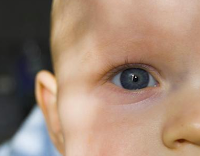
Researchers in the UK have developed a new blood test, which hopes to improve diagnosis and treatment for children born with congenital cataracts.
Diagnosing the presence of a cataract is fairly easy, the hard part is determining the cause of the child’s cataract. There are more than 100 different mutations linked to congenital cataracts and with no family history of cataracts, diagnosis of cause can be very difficult. Determining this cause is important because the child’s cataract may have formed due to another congenital condition such as a metabolic disorder or Down syndrome. In approximately 25 percent of children with cataracts at birth, the condition is due to another genetic cause.
The blood test developed analyzes every known DNA mutation that causes cataracts to help speed up diagnosis of the cause. This leads to better treatment and the ability to inform families of genetic risks for the future.
Ophthalmologist Clayton Falknor, M.D. offered, “Treatment for children with cataracts is tailored to the child. In mild cases, no removal is necessary, but in many cases, the cataract must be removed in order for the child to develop his or her best possible eyesight. Depending the child’s age and other factors, a lens implant may be placed at the time of surgery to replace the clouded lens.”
A cataract is a clouding of the lens in the eye that affects vision. In the US, only 0.4 percent of children are born with cataracts.
Sources:
http://www.bbc.co.uk/news/health-24084614
http://www.childrensnational.org/DepartmentsandPrograms/default.aspx?Type=Dept&Id=345&Name=Ophthalmology&SubType=ConditionOrTreatment&SubId=485&subname=Cataract%20and%20other%20lens%20abnormalities

An Australian study published this month in Ophthalmology, the journal of the American Academy of Ophthalmology, shows that people with vision loss attributed to cataracts who have had cataract surgery live longer than those with cataract-related vision loss who forgo the procedure. Those who had cataract surgery were found to have a 40 percent lower long-term mortality risk.
From 1992 to 2007, the study followed 354 individuals aged 49 years and older who had been diagnosed with vision impairment due to cataracts. Adjustments were made for a number of mortality risk factors including age, gender, diabetes, smoking, body mass index, hypertension, measures of frailty, and comorbid disease.
Corroborating previous research indicating that individuals with visual impairment were likely to have a greater mortality risk than their peers with normal vision, this study continues to suggest that healthy vision results in general good health.
The correlation between visual impairment correction and reduced mortality is not completely clear, but possible factors include improved physical and emotional well-being, greater optimism and confidence, and ability to comply with prescription medications.
Ophthalmologist Thomas Henderson, M.D., explained, “My experience matches the results of this study. Even with Alzheimer’s, the patients who get their cataracts removed do better because of increased contact with the world. Thirty years ago, I had a patient who was bilaterally blind from cataract. She was on psychiatric medication because she thought people were stealing from her and others thought she was just paranoid. I did cataract surgery giving her normal vision in both eyes. She stopped her medication because she was better oriented to the world, and the stealing stopped because she could see.”
A cataract is a clouding of the lens in the eye that affects vision. Most cataracts are related to aging and by age 80, more than half of all Americans either have a cataract or have had cataract surgery. To determine if you have cataracts, contact your ophthalmologist and schedule a comprehensive dilated eye exam.
As the baby boomer population begins to age, so too do their eyes. Now in their late 50’s and into their 60’s, many are developing cataracts, a common occurrence which affects 50% of the U.S. population by age 80.
“What we are finding is baby boomers with cataracts are typically still employed, and they want to return to work as quickly as possible,” explained ophthalmologist Thomas Henderson, M.D. “Laser cataract surgery provides not only greater precision, but also quick recovery for patients. Many patients comment on how soon they were able to return to life as normal.”
Cataracts are the leading cause of blindness worldwide. A cataract is a clouding of the lens in the eye that affects vision. Symptoms of cataracts may include cloudy or blurry vision, colors seem faded, glare, a halo may appear around lights, poor night vision, double vision, and frequent prescription changes in your eyeglasses or contact lenses.
 |
| Normal Vision |
 |
| Vision with Cataract |
Ophthalmologist Clayton Falknor, M.D. offered, “Baby boomers are more interested than prior generations in achieving partial or complete glasses independence after cataract surgery. With the benefits of laser cataract surgery and advances in lens implant technologies, such as toric lenses for astigmatism management and multifocal lenses for reduced need for reading glasses, this outcome is increasingly encountered.”
To determine if you have cataracts, you should contact your eye doctor and schedule a comprehensive dilated eye exam. In addition to cataracts, your eye doctor can check for other age-related issues such as macular degeneration and glaucoma. Early detection and treatment for eye diseases may save your sight.
SOURCE: http://www.nei.nih.gov/health/cataract/cataract_facts.asp


